
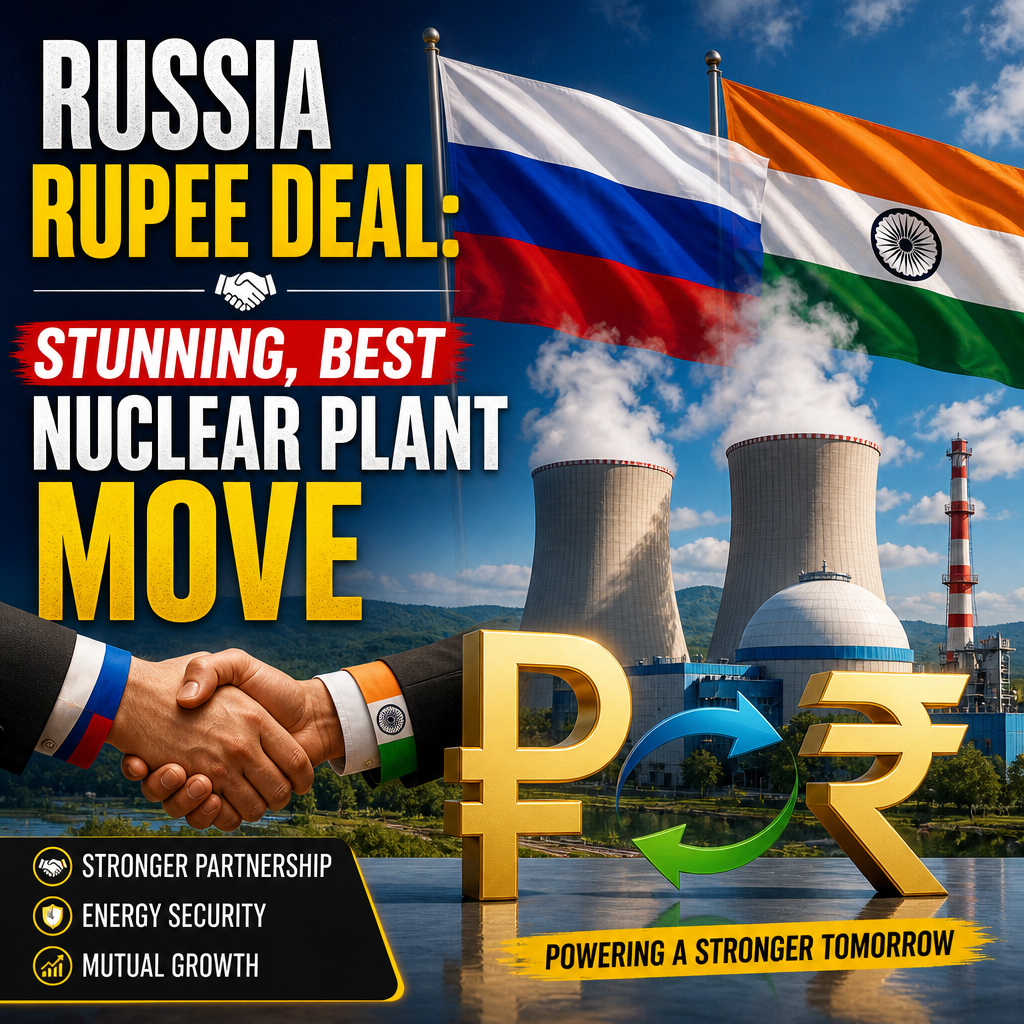
Russia Rupee Deal: Stunning, Best Nuclear Plant Move


Russia Rupee Deal is more than a financial workaround; it is a sign of how geopolitics, sanctions, and energy ambitions are reshaping big infrastructure projects in South Asia.
At the center of the story is Bangladesh’s Rooppur nuclear power plant, a Russian-built project that has become a test case for how countries can keep strategic deals moving even when the global financial system is under pressure. Reporting around the arrangement suggests Moscow is increasingly willing to accept local-currency settlements, including rupees, to reduce friction in cross-border trade and investment. Supporters see that as pragmatic. Critics see it as another reminder that sanctions and currency politics are complicating already expensive, high-stakes projects.



Why the Russia Rupee Deal matters
For Russia, accepting rupees is part of a broader push to move away from dependence on the U.S. dollar and Western banking channels. That shift has accelerated since sanctions tightened after the war in Ukraine. In that sense, the deal is not just about one nuclear plant; it reflects Moscow’s effort to keep trade flowing with partners that are either neutral or cautious about joining Western pressure campaigns.
For Bangladesh, the logic is more practical than ideological. Rooppur is a major energy investment, and large projects require predictable financing, stable contractors, and payment systems that do not break down under political stress. A rupee-based arrangement can help avoid immediate currency bottlenecks, especially when the country is managing import bills, reserve pressure, and the complexity of paying a foreign supplier for a long-term project.




Still, this kind of deal is not a free pass. Settling in rupees may ease one problem while creating others. Currency conversion, exchange-rate volatility, and the question of where those rupees will ultimately be spent all matter. If the money cannot be used efficiently by the supplier, the arrangement only delays payment pressure rather than eliminating it.
The nuclear angle is as important as the currency angle
Rooppur is not an ordinary construction project. Nuclear plants involve safety, long timelines, technical oversight, and political trust. That is why the economics cannot be separated from the engineering. A financing model that looks clever on paper can still become messy if construction stalls, costs rise, or oversight weakens.
That concern is especially relevant in a region where energy demand is growing quickly and governments are under pressure to add capacity without compromising safety. Nuclear power can offer low-carbon baseload electricity, but only if governance is strong and the project is managed transparently. The Bangladesh plant has drawn attention precisely because it sits at the intersection of energy security, foreign dependence, and long-term risk.
What the different news angles are saying
A reading of the wider coverage shows three broad viewpoints:
– The Russian view: Moscow presents rupee settlement as evidence that it can work around sanctions and keep strategic partnerships alive. The emphasis is on resilience, flexibility, and the idea that multipolar finance is replacing old Western dominance.
– The Bangladeshi view: Dhaka appears focused on continuity. The priority is not geopolitical symbolism but keeping a critical energy project moving without exposing the country to avoidable payment shocks.
– The skeptical international view: Global observers tend to ask whether such arrangements reduce risk or simply postpone it. Concerns include sanction exposure, debt burdens, project transparency, and whether currency swaps truly solve the underlying financing challenge.
That mix of views matters because the deal is being interpreted through very different lenses. To one side, it looks like smart statecraft. To another, it looks like a workaround forced by a world of tightened financial rules. The truth is probably somewhere between the two.
The bigger geopolitical picture
The Russia Rupee Deal also highlights how much the global economy now runs through politics. In theory, trade is supposed to be guided by efficiency. In practice, energy deals, weapons contracts, and nuclear infrastructure increasingly depend on whether governments can navigate sanctions, banking restrictions, and currency controls.
This is where the story becomes larger than Bangladesh or Russia. Similar arrangements are appearing across the world as countries try to reduce exposure to the dollar, diversify partners, or protect themselves from secondary sanctions. Some see this as healthy diversification. Others worry it fragments the financial system and makes transactions less transparent.
There is also a diplomatic layer. Bangladesh does not want to be trapped in a binary choice between major powers. It needs infrastructure, fuel, and capital from whichever source is available, but it also has to preserve room to maneuver with India, China, Russia, and Western lenders. A rupee settlement deal may look narrow, but it is actually part of that balancing act.
What to watch next
The real test is not whether the deal can be announced, but whether it can function smoothly over time. Key questions include:
– Will rupee settlement remain stable if exchange rates shift sharply?
– Can the arrangement support the scale of payments needed for a nuclear project?
– Will sanctions pressure intensify or ease?
– Can Bangladesh maintain transparency and oversight as costs and timelines evolve?
– Will the project deliver reliable electricity at a price that justifies the political and financial complexity?
Those unanswered questions are important because they underline the central uncertainty: the deal may be useful, but it is not a magic fix.
In the end, the Russia Rupee Deal looks less like a dramatic breakthrough than a practical adaptation to a more fragmented world. It may help Bangladesh keep a strategically important nuclear project on track, and it may help Russia keep trade moving despite sanctions. But it also exposes the limits of workaround finance. Currency innovation can solve immediate problems, yet it cannot erase the deeper risks of geopolitics, project execution, and nuclear dependence.

























